
14 Oct 2026 · @Ele
There are two main trading card sizes: Standard-size and Japanese-size. One common misconception is that trading card games originating in Japan, such as Pokémon, must use Japanese-size cards. However, this isn’t always the case. Pokémon, Magic: The Gathering and several other popular TCGs actually use larger standard-size cards, whilst Yu-Gi-Oh!, Cardfight!! Vanguard, Battle Spirits and others alternatively use a smaller Japanese-size format.
So, which size is right for your trading card game, and where did these different sizes originate? We’ll answer both questions below, helping you identify the correct size for your cards whilst exploring the history behind both formats.
The sizes side by side
Japanese-size cards (59 x 86mm) are 4mm narrower and 2mm shorter than Standard-size cards (63 x 88mm). That might not sound like much, but it’s the difference between a snug fit and a card that slides around (or won’t fit at all).
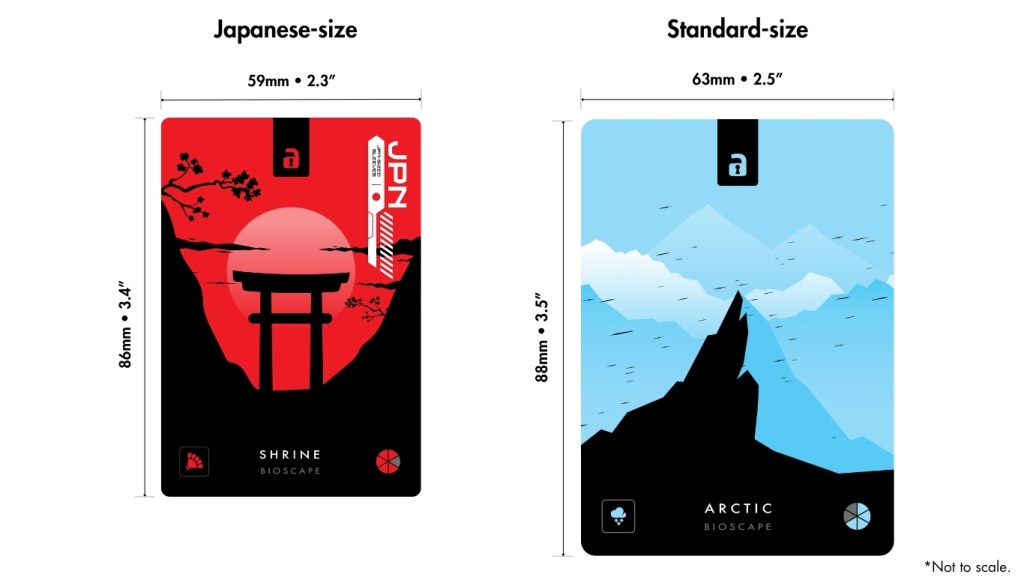
To find out which size your card might be, ‘Japanese-size’ or ‘Standard-size‘, check our Find Your Trading Card Size table below.
Find Your Trading Card Size
| Trading Card Game | Trading Card Size |
|---|---|
| Yu-Gi-Oh! (OCG, TCG and Rush Duel) | Japanese-size (59 x 86mm) |
| Cardfight!! Vanguard | Japanese-size (59 x 86mm) |
| Battle Spirits | Japanese-size (59 x 86mm) |
| Dragon Ball Heroes | Japanese-size (59 x 86mm) |
| Pokémon TCG (every language) – not including Jumbo cards | Standard-size (63 x 88mm) |
| Magic: The Gathering | Standard-size (63 x 88mm) |
| Disney Lorcana | Standard-size (63 x 88mm) |
| One Piece | Standard-size (63 x 88mm) |
| Dragon Ball Super | Standard-size (63 x 88mm) |
| Digimon | Standard-size (63 x 88mm) |
| Weiss Schwarz | Standard-size (63 x 88mm) |
| Duel Masters | Standard-size (63 x 88mm) |
| Flesh and Blood | Standard-size (63 x 88mm) |
| Sports cards | Standard-size (63 x 88mm) |
Why are Japanese trading cards not always Japanese-size? 🇯🇵
The game that made Japanese-size cards famous worldwide was Yu-Gi-Oh!. Konami launched the Yu-Gi-Oh! Official Card Game in Japan in February 1999, using the smaller card format also associated with Bandai’s Carddass collectibles. These date back to 1988, when they were sold through vending machines, with early series including Saint Seiya. Carddass-based games, including Battle Spirits and Dragon Ball Heroes, later used the 59 × 86 mm format.
When Yu-Gi-Oh! arrived in North America in March 2002, Konami kept the same smaller card size, helping establish the format internationally.
As Yu-Gi-Oh! grew in popularity across the West, card sleeve manufacturers needed to distinguish this smaller format from standard-size cards. The term “Japanese-size” became widely used, alongside “small-size” and “Yu-Gi-Oh! size”.
Meanwhile, Pokémon, despite originating in Japan, uses the “Standard-size” format (63 × 88 mm), also used by Magic: The Gathering. This helped align Pokémon with the established American trading card market. This is where the confusion comes from, so it’s always worth checking your trading card size before purchasing card protection.
Choosing the Right Size Card Protection 🔒
Once you’ve identified your trading card size, you can find the appropriate protection for your TCG collection.
Japanese-size Card Protection (59 × 86 mm)
Vault X Japanese Size Binders and Exact Fit Sleeves are designed specifically for Japanese-size trading card games such as Yu-Gi-Oh!, Cardfight!! Vanguard and Battle Spirits.
→ Shop Japanese-size Binders & Sleeves
→ Find Out More: Japanese-size Binders & Sleeves
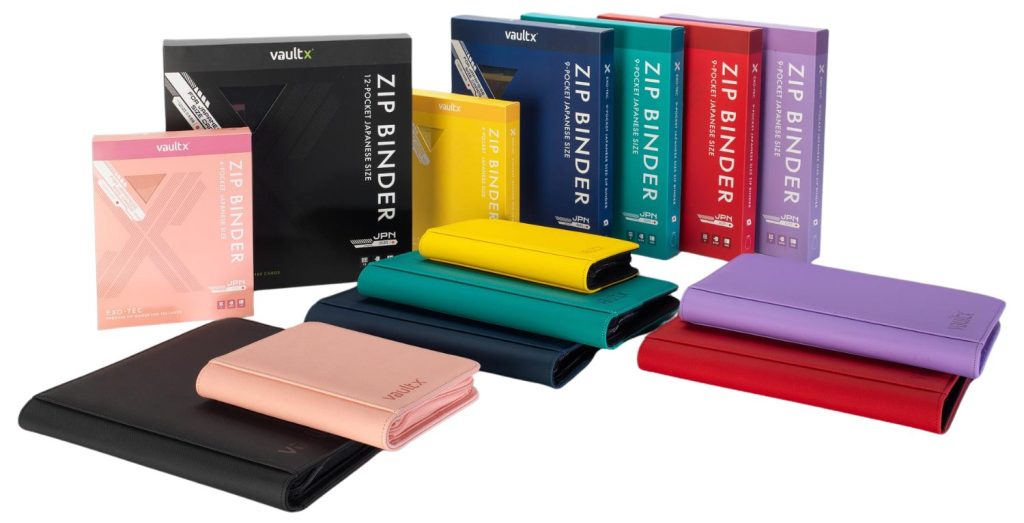
Most of our other Binders and Card Sleeves are designed for standard-size cards, including Pokémon, Magic: The Gathering and One Piece. Check the product description and compatibility before purchasing. → Shop the Vault X Range